What Is Artificial Intelligence And How Does It Work? Explained!
Have you ever wondered what artificial intelligence really is and how it affects your life? You might think it’s just a tech buzzword, but AI is much more than that.
It’s the smart technology behind many tools you use every day, from your phone’s voice assistant to personalized recommendations online. Understanding how AI works can give you a clearer picture of the future and how you fit into it. You’ll discover what artificial intelligence means and the simple ways it makes decisions, learns, and adapts—without needing a tech background.
Keep reading, because what you learn here might change the way you see technology forever.
Basics Of Artificial Intelligence
Artificial Intelligence (AI) is a field in computer science focused on creating machines that think and learn like humans. It enables computers to perform tasks that usually require human intelligence. These tasks include recognizing speech, making decisions, and solving problems. Understanding the basics of AI helps you grasp its impact on daily life and technology.
Origins And Evolution
The idea of machines that can think dates back to ancient times. Early myths spoke of mechanical beings with human traits. In the 1950s, AI became a formal science. Researchers aimed to create programs that mimic human thinking. Over decades, AI grew through new techniques and more powerful computers. Today, AI is part of many technologies around us.
Types Of Ai
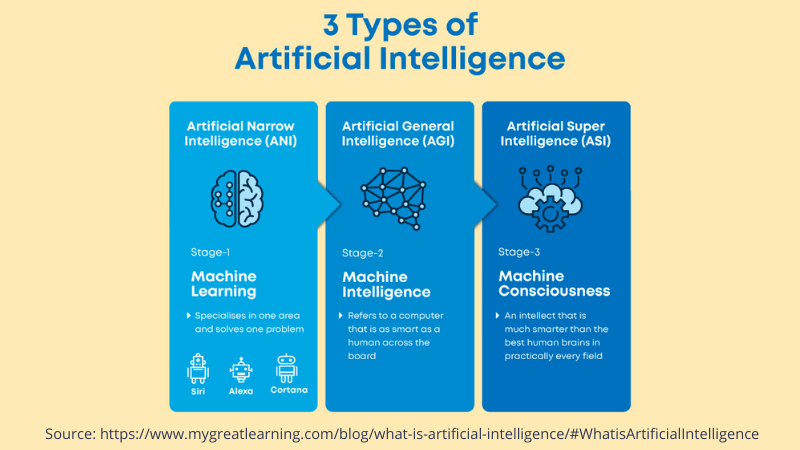
AI comes in different forms. Narrow AI focuses on specific tasks, like voice assistants or recommendation systems. General AI, still theoretical, would perform any intellectual task a human can. Another type is Super AI, which would surpass human intelligence. Most AI today is narrow, designed for specific uses.
Core Concepts
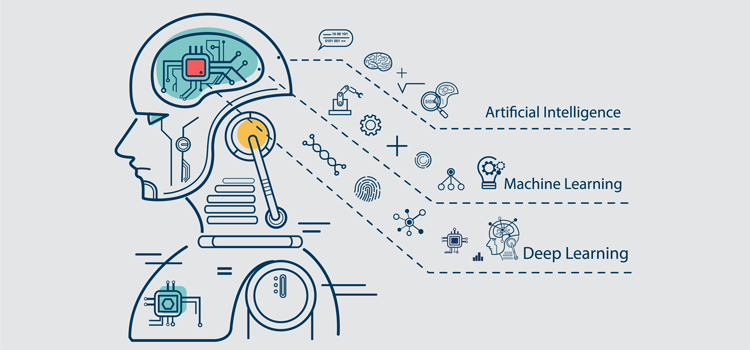
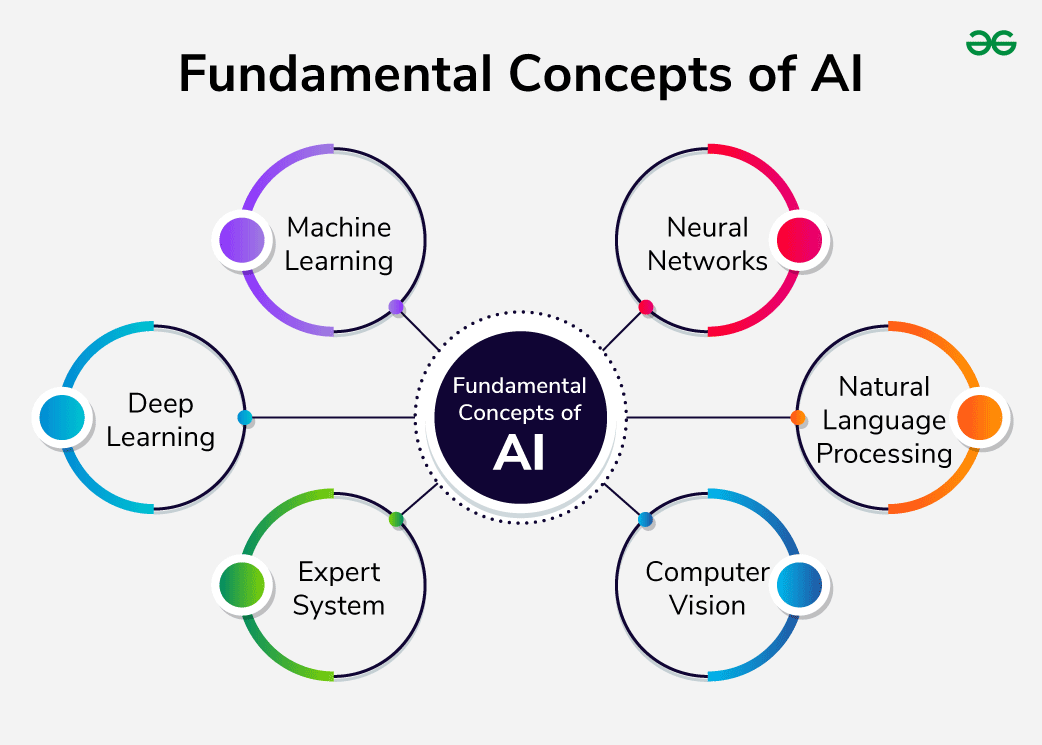
AI relies on key ideas like machine learning, where computers learn from data. Deep learning uses neural networks to process complex information. Natural language processing helps computers understand human language. Algorithms drive AI by solving problems step-by-step. These concepts work together to create intelligent systems.
Key Components Of Ai Systems
Artificial intelligence systems rely on several important parts. These parts work together to help machines learn and solve problems. Understanding these key components helps us see how AI functions in daily life.
Each part has a unique role. They allow AI to process data, recognize patterns, and make decisions. Below are the main elements that form the backbone of AI systems.
Machine Learning
Machine learning lets computers learn from data without being programmed for every task. It uses algorithms to find patterns and improve over time. This helps AI make predictions and decisions based on past information.
Neural Networks
Neural networks are inspired by the human brain’s structure. They consist of layers of nodes that process information. This setup allows AI to recognize complex patterns like images or sounds with high accuracy.
Natural Language Processing
Natural language processing, or NLP, helps AI understand and use human language. It enables machines to read, interpret, and respond to text or speech. This is key for chatbots and voice assistants.
Computer Vision
Computer vision allows AI to see and interpret the visual world. It helps machines identify objects, faces, and scenes in images or videos. This technology powers tools like facial recognition and image search.
How Ai Processes Information
Artificial Intelligence processes information through several key steps. Each step helps AI understand and respond to data. These steps form the backbone of how AI learns and makes decisions. The process starts with collecting data and ends with making choices.
Data Collection And Preparation
AI needs data to learn. It collects information from many sources like text, images, or numbers. This raw data often has errors or missing parts. Cleaning and organizing the data is vital. Proper preparation ensures AI learns from good quality information.
Model Training
Training means teaching the AI system using prepared data. The AI looks for patterns and connections in the data. It adjusts its internal settings to improve accuracy. This step requires a lot of examples to get better results. The more data, the smarter the AI becomes.
Pattern Recognition
AI identifies recurring trends in the data during training. It detects shapes, sounds, or words depending on the task. Recognizing these patterns helps AI understand new information. This ability allows AI to predict or classify future data correctly.
Decision Making
After learning, AI uses its knowledge to make decisions. It analyzes new data based on patterns it knows. The AI then selects the best action or answer. This process happens quickly, often in real time. Decision making enables AI to assist in many practical tasks.
Applications Of Ai Today
Artificial intelligence (AI) is changing many parts of daily life. It helps industries work faster and smarter. AI uses data and patterns to make decisions and solve problems. The technology is now common in several key areas.
Healthcare
AI helps doctors find diseases early. It analyzes medical images like X-rays quickly. AI also suggests treatments based on patient data. This support can save lives and improve care. Robots assist in surgery for more precision.
Finance
Banks use AI to detect fraud in real-time. It checks transactions for unusual activity. AI also helps with loan approvals by assessing risks. Many companies use AI for better investment advice. It speeds up customer service with chatbots.
Transportation
Self-driving cars rely on AI to navigate roads safely. AI manages traffic flow in smart cities. It predicts maintenance needs for vehicles and trains. Delivery drones use AI to plan routes efficiently. AI improves travel safety and convenience.
Entertainment
Streaming services use AI to suggest movies and shows. It learns what users like and offers choices. AI helps create video game characters that act smart. Music apps recommend songs based on listening habits. This makes entertainment more personal and fun.
Challenges In Ai Development
Developing artificial intelligence (AI) comes with many challenges. These challenges affect how AI grows and how people use it safely. AI must be designed to work well and be fair to all users. It must also protect user information and work within technical limits.
Ethical Considerations
AI raises questions about right and wrong. Developers must think about how AI affects people’s lives. It is important to avoid harm and respect human rights. AI should not be used to unfairly control or judge people.
Bias And Fairness
AI learns from data, but data can be biased. Biased data leads to unfair AI decisions. This causes problems in hiring, lending, and law enforcement. Making AI fair requires careful data selection and testing.
Data Privacy
AI needs a lot of data to learn. This data often includes personal information. Protecting this data is crucial to keep people safe. Developers must follow privacy laws and use strong security measures.
Technical Limitations
AI is powerful but not perfect. It can make mistakes or misunderstand situations. Building reliable AI requires solving many technical problems. AI also needs strong computers and lots of energy to work well.
Future Trends In Ai
The future of artificial intelligence holds many exciting possibilities. AI will continue to evolve and impact many areas of life. New technologies and ideas will shape how AI works and how people use it.
Understanding these future trends helps us prepare for changes and benefits AI may bring. Here are some key trends to watch in AI’s future.
Advancements In Deep Learning
Deep learning will become more powerful and efficient. AI systems will learn from larger data sets faster. This progress will improve AI’s ability to recognize patterns and make decisions. New models will require less human input and energy.
Ai And Automation
Automation will grow in many industries. AI will handle more tasks, from simple to complex. This will increase productivity and reduce human error. Many jobs will change as AI takes over routine work. People will focus more on creative and strategic roles.
Human-ai Collaboration
AI will work alongside humans more closely. People and machines will share tasks to reach better results. AI will support decision-making, not replace humans. This teamwork will improve problem-solving and creativity. Trust and understanding between humans and AI will grow.
Regulatory Landscape
Governments will create more rules to guide AI use. These rules will protect privacy, security, and fairness. Regulation will help prevent misuse and bias in AI systems. Clear guidelines will build public trust in AI technologies. Businesses will need to follow new standards carefully.
Frequently Asked Questions
What Is Artificial Intelligence In Simple Terms?
Artificial intelligence is the simulation of human intelligence by machines. It enables computers to learn, reason, and solve problems. AI mimics human thinking to perform tasks like speech recognition and decision-making.
How Does Artificial Intelligence Work In Everyday Life?
AI works by processing data through algorithms and learning from patterns. It powers voice assistants, recommendation systems, and smart home devices, making life easier and more efficient.
What Are The Main Types Of Artificial Intelligence?
The main types are Narrow AI, which performs specific tasks, and General AI, which can perform any intellectual task a human can. Most current AI is Narrow AI.
Why Is Artificial Intelligence Important For Businesses?
AI helps businesses automate tasks, improve customer service, and analyze data faster. It boosts efficiency, reduces costs, and supports better decision-making.
Conclusion
Artificial intelligence helps machines learn and solve problems like humans. It uses data and patterns to make decisions. AI is part of many tools we use every day. Understanding how AI works can help us use it better. It’s important to keep learning about AI’s role in our world.
AI will continue to grow and change many areas of life. The future with AI is full of possibilities and challenges. Stay curious and open to what AI can offer.